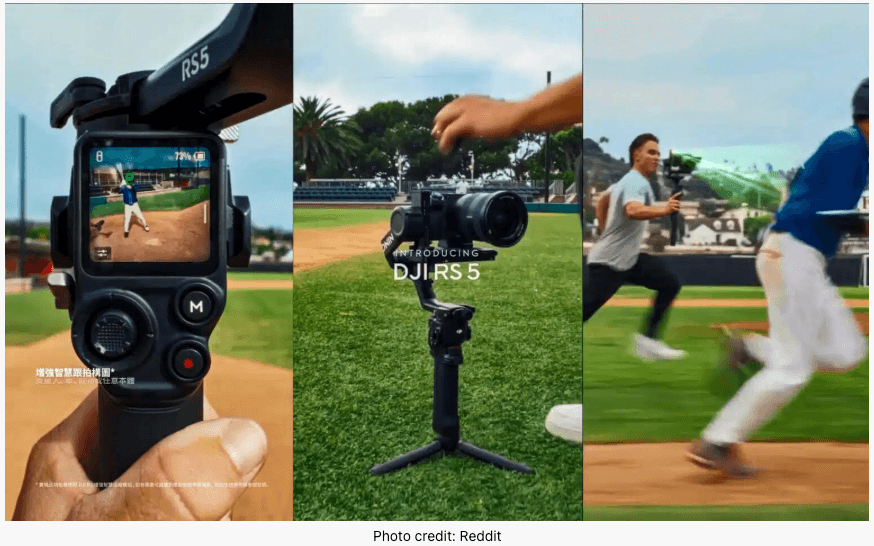
DJI leaks are like sequels that accidentally premiere before the trailer, and today’s Ronin RS5 leak came with an unexpected plot twist.
We went in expecting incremental upgrades, a few spec bumps, maybe a new handle and a slightly different shade of black. What we did not expect was to watch a videographer casually keep up with, and arguably outperform, a professional baseball player while holding a fully rigged gimbal.
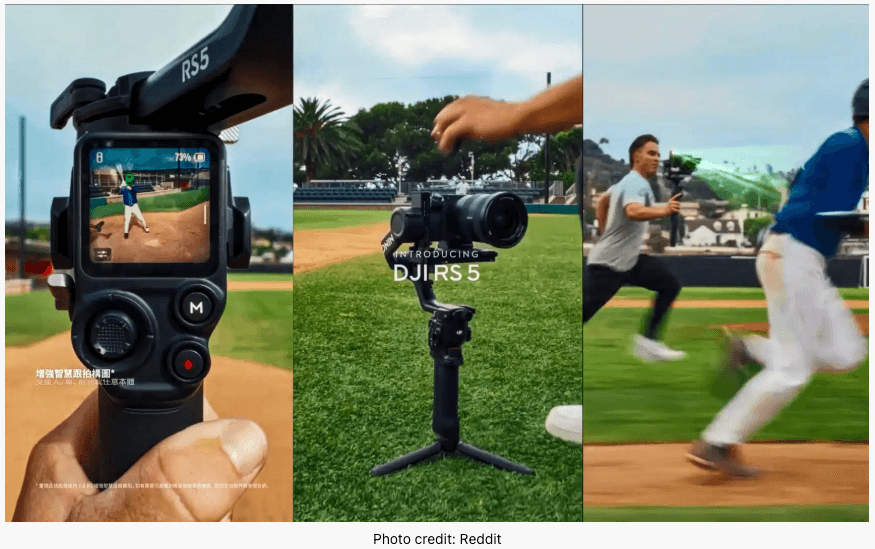
In the leaked official video, a videographer is seen filming a baseball player using a Sony camera mounted on the DJI RS5. The athlete is sprinting. The videographer is sprinting. And somehow, the footage stays locked, smooth, and composed, like physics took a coffee break.
What impressed DroneXL most was not just the tracking. It was the fact that the videographer was not only keeping up with a trained athlete, but doing it while holding a gimbal, running full speed, and still delivering usable footage. That is not marketing fluff. That is a stress test.
Object tracking that finally makes sense
For years, Ronin tracking has been very human focused. Faces, torsos, influencers walking toward the camera in slow motion. Fine for social media. Less useful when your subject is not a person, or when the person is moving unpredictably at high speed.
The RS5 changes that.
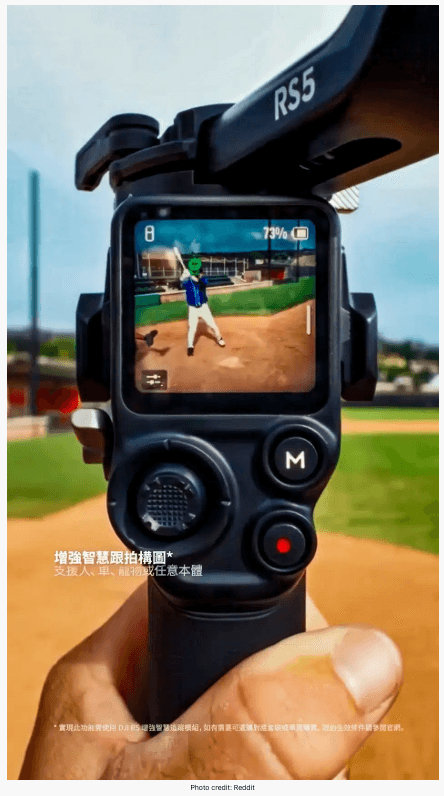
According to the leaked video, the new tracking system can now lock onto objects, not just people. That is a massive shift. In the baseball sequence, the system stays glued to the player even during fast lateral movement, sudden acceleration, and direction changes, exactly the kind of motion that usually breaks tracking systems or turns footage into a nervous mess.
For architecture and real estate videographers, this may sound unrelated at first, but it is the same technology applied differently. If the RS5 can track a sprinting athlete, it can absolutely track a staircase, a facade, or a perfectly framed doorway while you focus on movement instead of micro corrections.
Another standout detail is that when using the tracking module, you can clearly see the selected subject directly on the gimbal screen. No guessing what the system is tracking. No hoping it understood your intent. You see it, you confirm it, and you move.
LiDAR focus and modular design get serious
DJI is clearly leaning into modular workflows with the RS5.
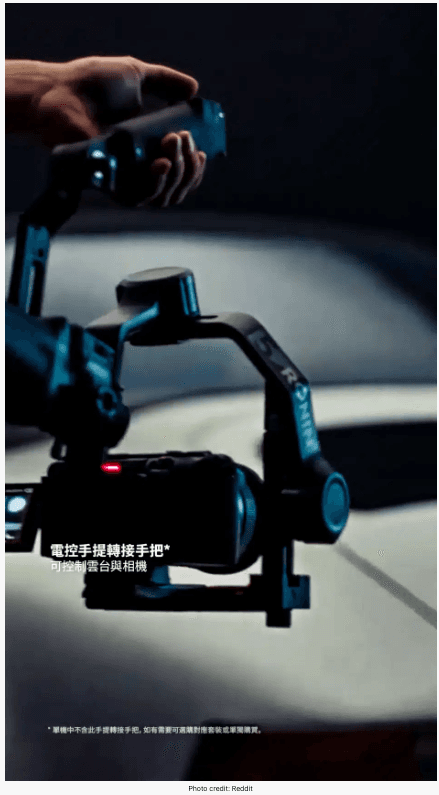
The leaked footage confirms enhanced NATO rails and improved vertical shooting support, which makes switching configurations less painful, especially for shooters bouncing between horizontal and vertical content all day.
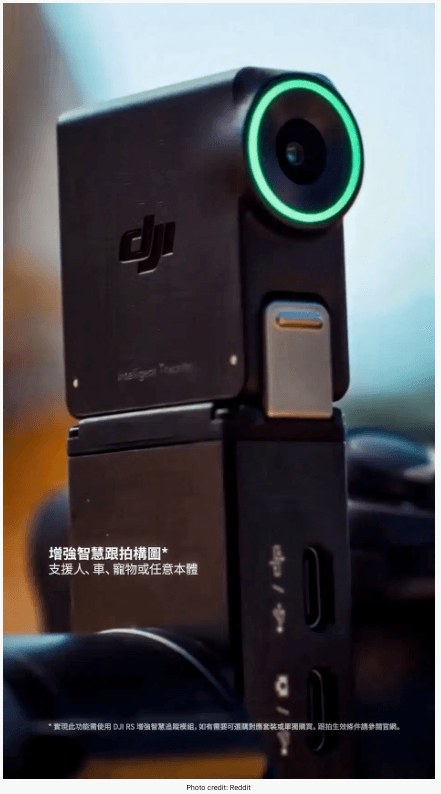
The side mounted slot for the DJI Intelligent Tracking LiDAR module is where things get interesting. The next generation ActiveTrack Pro can now read images directly from the camera built into the Focus Pro LiDAR Autofocus system. This means no Ronin Image Transmitter is required.
Fewer accessories. Fewer cables. Fewer things to forget at home.
AI driven autofocus in low light also becomes part of the package, which is particularly useful for interiors, gyms, event venues, and any environment where lighting is never quite as generous as promised.
Ergonomics, battery life, and real world details
The RS5 introduces the new BG33 intelligent grip, replacing the familiar handle with a more modern design and a noticeable battery improvement. DJI claims a 15 percent increase, pushing runtime beyond 13 hours.
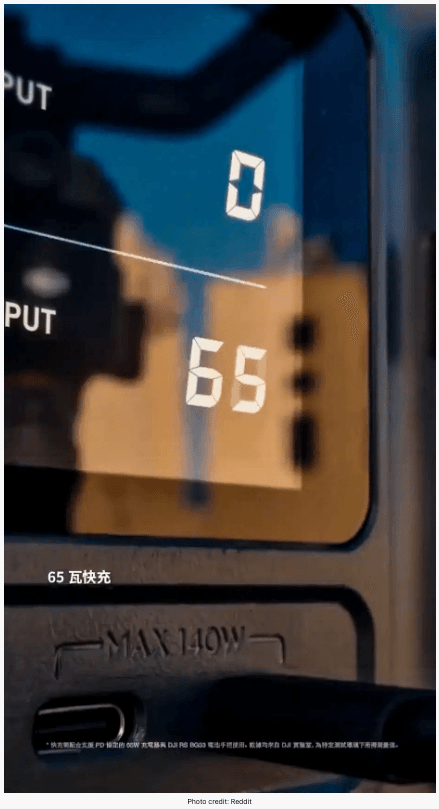
Charging is now a one hour affair over USB C with 65 W Fast Charge, which means fewer battery swaps and less downtime. Wedding shooters, travel vloggers, and event filmmakers will appreciate this more than they will ever admit.
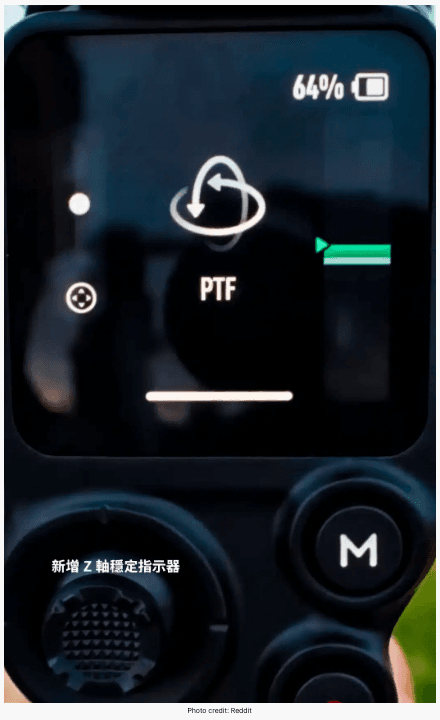
A built in Z axis indicator helps with balancing, which sounds small until you remember how often balancing happens under pressure, in bad lighting, with a client watching.
The leaked video also shows an optional arm with integrated controls. This is genuinely useful. Being able to hit record with your free hand while shooting extremely low or high angles solves a very real problem. When your grip position is compromised, extra controls stop being a luxury and start being necessary.
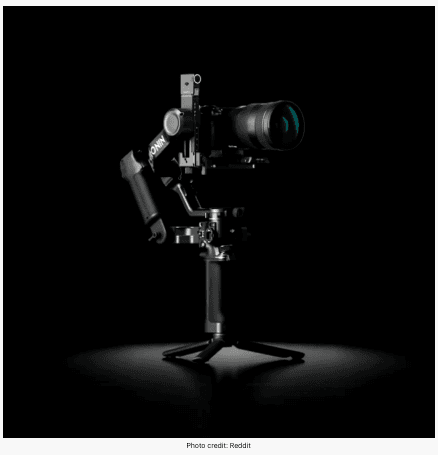
Payload capacity remains at 3 kg, or 6.6 pounds, the same as the RS4. That keeps the RS5 firmly in mirrorless territory, which is exactly where most professionals are working anyway.
Source: DroneXL Author: Rafael Suárez